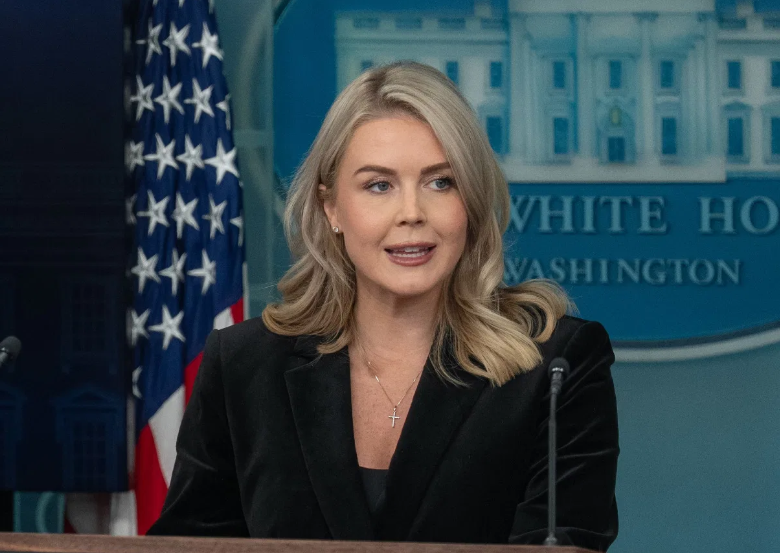
Karoline Leavitt regarding media access to Donald Trump and how it compares to the level of visibility associated with Joe Biden during his time in office. Speaking at a media-focused event hosted by Axios co-founder Mike Allen, Leavitt addressed questions about whether recent changes to White House press access could limit transparency or affect how history is documented.
Leavitt pushed back on the idea that the administration is restricting media coverage. Instead, she framed the changes as an expansion of access, arguing that they are designed to include a broader and more diverse range of media outlets. Traditionally, a small group of organizations—particularly those in the 13-member White House press pool—have had consistent, privileged access to the president in settings like the Oval Office or aboard Air Force One. Leavitt contended that this system concentrated access among a limited number of outlets and did not reflect the diversity of today’s media environment.
According to her, the administration’s approach opens opportunities for more journalists, including digital and nontraditional outlets, to participate in coverage. She emphasized that thousands of outlets hold press credentials and hundreds actively cover the White House, raising the question of why only a select few should consistently receive exclusive access. By rotating participation more widely, she argued, the administration is increasing transparency, accessibility, and representation across the media landscape.
Concerns raised by the White House Correspondents’ Association were also addressed. The association had suggested that government involvement in determining media access could risk undermining independent journalism. Leavitt disagreed, arguing that a small group within the association should not control who gets access to the president. She maintained that no outlets have been barred and that even critical or “hostile” media organizations continue to be included, indicating that the policy is not driven by ideological considerations.
The conversation also included comparisons between Trump and Biden regarding media engagement. A report from Axios was cited, noting that Biden had conducted significantly fewer press conferences and interviews than several recent presidents at a comparable point in his term, while Trump had participated in a much higher number. This contrast was used to support the argument that Trump has been more accessible to the media and, by extension, the public.
Overall, the text reflects an ongoing debate about media access, transparency, and control. It highlights differing perspectives on whether changes to press access rules broaden participation or risk compromising journalistic independence, while also underscoring contrasting presidential communication styles and their impact on public visibility.