A Senate showdown over President Donald Trump’s future Air Force One ended almost as quickly as it began after a single Republican senator blocked Democratic leaders from advancing the legislation.
The brief exchange highlighted both the Senate’s procedural rules and an unexpected dispute over whether the proposal could have affected a critical component of the nation’s nuclear defense system.
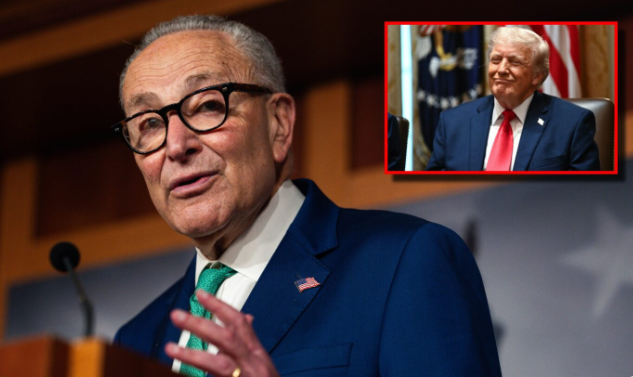
Sen. Deb Fischer, R-Neb., on Wednesday objected to Senate Minority Leader Chuck Schumer’s request to pass legislation that would have prohibited the Defense Department from spending taxpayer money to modify the Boeing 747 that Qatar has offered for use as a future Air Force One.
Because Schumer sought unanimous consent to pass the bill, Fischer’s lone objection prevented the measure from advancing.
It marked the second time this year that the Senate rejected Schumer’s proposal.
Schumer has argued that taxpayers should not bear the cost of converting the aircraft into a presidential plane.
On the Senate floor, he estimated the aircraft’s value at approximately $400 million and said hundreds of millions of additional taxpayer dollars could be required to install the communications, security and defensive systems needed for presidential travel.
“Now he wants the taxpayers to fund his palace in the sky as well,” Schumer said.
“Trump’s $400 million foreign jet, the biggest gift a president has received from a foreign government ever, is anything but free.”
Schumer also criticized the arrangement as raising ethical concerns, though questions surrounding the legality of the proposed aircraft transfer have not been resolved by a court.
Fischer argued, however, that the legislation contained broader language that could unintentionally affect another military aircraft program.
According to Fischer, the bill would have prohibited funding for aircraft previously owned by foreign governments, language she said could also apply to the Survivable Airborne Operations Center program.
The SAOC program is designed to replace the Air Force’s aging airborne command aircraft, which are intended to provide the president and military leaders with secure command-and-control capabilities during a national emergency, including a potential nuclear conflict.
The replacement aircraft for that program were acquired from Korean Air before being selected for military conversion.
“This is the plane that will command and control our nuclear weapons on America’s worst day,” Fischer told Fox News.
“We cannot play these political games with the nuclear triad.”
Republicans argued that the legislation, as written, risked delaying or restricting funding for the SAOC program while attempting to target the proposed Air Force One aircraft.
No Democratic senator responded on the Senate floor to Fischer’s specific argument before the unanimous consent request failed.
The dispute centers on President Trump’s plan to use the Boeing 747 offered by Qatar after it undergoes extensive modifications to meet presidential security standards.
Reports have indicated the aircraft would require significant upgrades, including advanced communications equipment, missile-defense systems and other classified security features before it could safely serve as Air Force One.
Administration officials have acknowledged that substantial work would be necessary before the aircraft could enter presidential service.
The Senate had previously voted down similar legislation earlier this year, but Schumer brought the proposal back for another attempt.
With Fischer’s objection, the measure again failed to advance.
Whether Congress revisits the issue remains unclear.
Lawmakers could introduce revised legislation that more narrowly targets funding for the Qatari aircraft without affecting other military aviation programs, though no such proposal has yet been brought forward, Fox News reported.
For now, the administration continues evaluating the future of the aircraft while broader questions remain about its cost, the timeline for any modifications and how those upgrades would ultimately be funded.