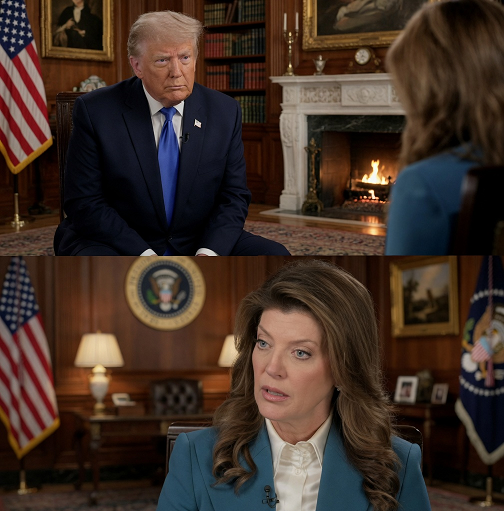
Tense exchange between Donald Trump and journalist Norah O’Donnell during a reported sit-down interview for 60 Minutes. According to the account, the confrontation occurred after O’Donnell read excerpts from what the text calls a manifesto connected to a shooter who targeted the White House. The passage reportedly included highly inflammatory accusations, referring to a “pedophile,” “rapist,” and “traitor.” The article portrays this moment as an attempt by the interviewer to confront Trump with hostile rhetoric allegedly written by the suspect.
Trump is said to have responded immediately and forcefully. The text claims he accused O’Donnell and the media organization of being “horrible people,” suggesting he had anticipated that such material would be brought up during the interview. He then reportedly denied the accusations directly, stating that he had never committed rape and rejecting the language as false and defamatory. The article frames his response as a sharp rebuttal against both the allegations and the decision to air them.
According to the narrative, when O’Donnell attempted to clarify by asking whether Trump believed the manifesto was referring to him, he interrupted and criticized her for reading what he described as the words of a disturbed individual. The text says Trump argued that such statements should not be repeated on national television, particularly on a respected news program. He reportedly told O’Donnell she should feel ashamed for presenting the remarks publicly.
The article strongly favors Trump’s side of the encounter, portraying him as prepared, assertive, and unafraid to challenge mainstream media figures directly. It presents the moment as an example of Trump confronting what supporters often label “fake news” or biased journalism. The closing language celebrates his pushback, claiming he refused to allow false accusations to go unanswered in real time.
At the same time, the text offers no broader context about the interview, the suspect, the authenticity of the manifesto, or whether the quoted lines were introduced as part of a legitimate journalistic question about political violence or security threats. It also does not include O’Donnell’s reasoning, editorial framing, or any response from CBS News. As written, the account functions more as commentary than balanced reporting, emphasizing emotional reaction and media criticism rather than objective detail. Overall, it depicts a dramatic clash between Trump and a major television interviewer over controversial language and the role of journalists in repeating inflammatory accusations.