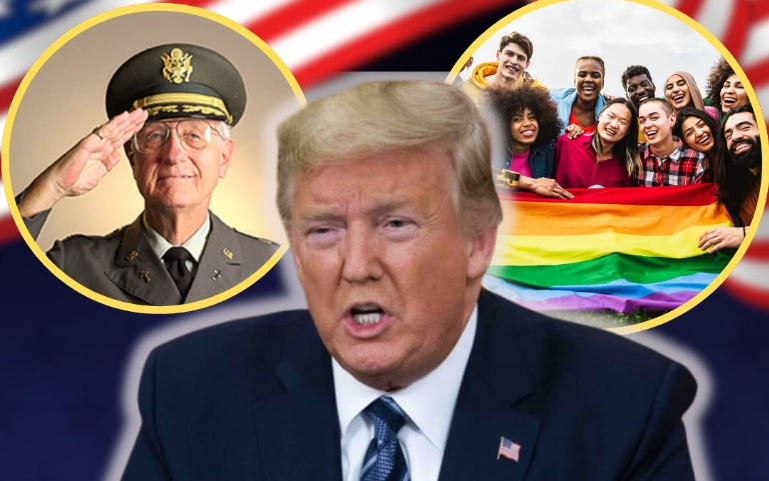
Reports circulating online have claimed that former President Donald Trump intended to replace LGBTQ+ Pride Month with a new month dedicated to honoring military veterans. The claim quickly generated debate across social media and political discussions because both Pride Month and recognition of veterans carry significant cultural and political importance in the United States.
According to the material provided, the alleged proposal would have changed the focus of June, traditionally recognized as Pride Month, toward celebrating veterans and their contributions to the country. Pride Month commemorates LGBTQ+ history, civil rights struggles, and progress toward equality, while veterans are already formally recognized through national observances including Veterans Day in November and Memorial Day in May.
Supporters of the reported idea argued that military service and sacrifice deserve greater national recognition. From this perspective, creating a dedicated Veterans Month could emphasize patriotism, military service, and the contributions of those who served in the U.S. armed forces.
However, the claim has also faced significant skepticism. One of the references provided is a PolitiFact fact-check stating that Trump did not suggest replacing Pride Month with Veterans Month. This indicates that the viral claim should not automatically be treated as an established policy proposal. Social-media posts on Facebook, Instagram, and X reportedly helped spread the allegation, but their existence does not independently establish that Trump formally proposed such a change.
The controversy also exists within a broader political debate surrounding the Trump administration’s policies and public messaging concerning LGBTQ+ issues. Organizations including the Human Rights Campaign and GLAAD have criticized the administration’s approach, while other sources have examined executive actions and policies affecting LGBTQ+ communities.
At the center of the discussion is a larger question about how governments recognize different communities and historical experiences. Critics of the alleged proposal argue that honoring veterans does not require eliminating recognition of LGBTQ+ Americans. They contend that the two forms of recognition can coexist and that replacing one with another could create unnecessary cultural divisions.
Supporters, meanwhile, frame the idea as an opportunity to place greater emphasis on military service and national sacrifice.
Ultimately, the supplied references do not establish that Trump formally announced or implemented a policy replacing Pride Month with Veterans Month. The available material instead shows that a viral claim circulated widely online and became the subject of political debate and fact-checking. The episode illustrates how social-media claims about symbolic government policies can spread rapidly, particularly when they involve highly polarizing cultural issues. It also highlights the importance of distinguishing between viral reports, political commentary, and officially documented government actions before treating such claims as confirmed policy.