Cory Booker Challenges Marco Rubio Over Renewed Iran Negotiations
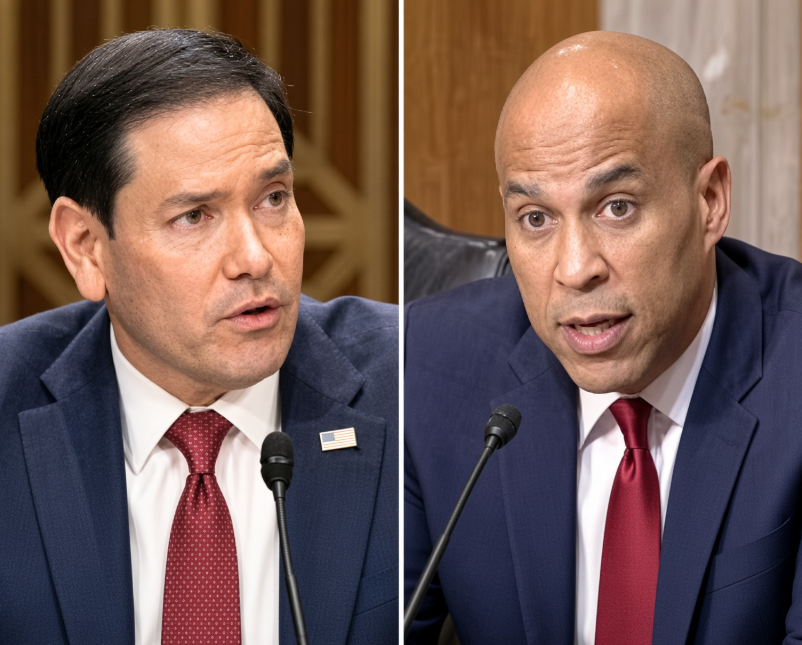
During a Senate hearing, Senator Cory Booker questioned Secretary of State Marco Rubio over the Trump administration’s renewed negotiations with Iran, focusing on whether Washington is considering sanctions relief in exchange for nuclear concessions. The exchange raised questions about the administration’s objectives following earlier declarations that the war with Iran had been decisively won.
A central issue was the Strait of Hormuz, a strategic maritime chokepoint through which roughly one-fifth of global oil supplies normally pass. Disruptions to shipping through the strait have significant implications for international energy markets, commercial transportation, and regional security.
Booker also scrutinized a proposed nuclear framework involving Iran’s highly enriched uranium and its capacity to enrich uranium. He argued that the emerging approach appeared similar to the nuclear agreement previously criticized by the Trump administration as insufficiently restrictive. His questioning focused on whether the administration’s current negotiating position was consistent with its earlier objections to diplomatic arrangements with Tehran.
Economic pressure formed another major part of the exchange. Estimates cited in the discussion placed potential sanctions relief between $10 billion and $50 billion, associated with Iranian oil sales to China. Rubio also defended the blockade’s economic impact, claiming it was costing Iran hundreds of millions of dollars daily. Meanwhile, disruptions to shipping have created broader concerns about the economic consequences of a prolonged confrontation.
The disagreement highlighted competing interpretations of Washington’s negotiating position. Booker questioned whether the administration was securing meaningful nuclear restrictions or making concessions after escalating military and economic pressure. Rubio’s position centered on the pressure being applied to Iran and the role of negotiations in pursuing U.S. objectives.
Ultimately, the hearing underscored unresolved questions about sanctions relief, nuclear safeguards, maritime security, and the long-term consequences of the conflict. The framework’s actual terms and outcomes would determine whether diplomacy produces enforceable restrictions or leaves major disputes unresolved.