Trump’s Cuba Claims: Economic Pressure and Allegations of Political Influence
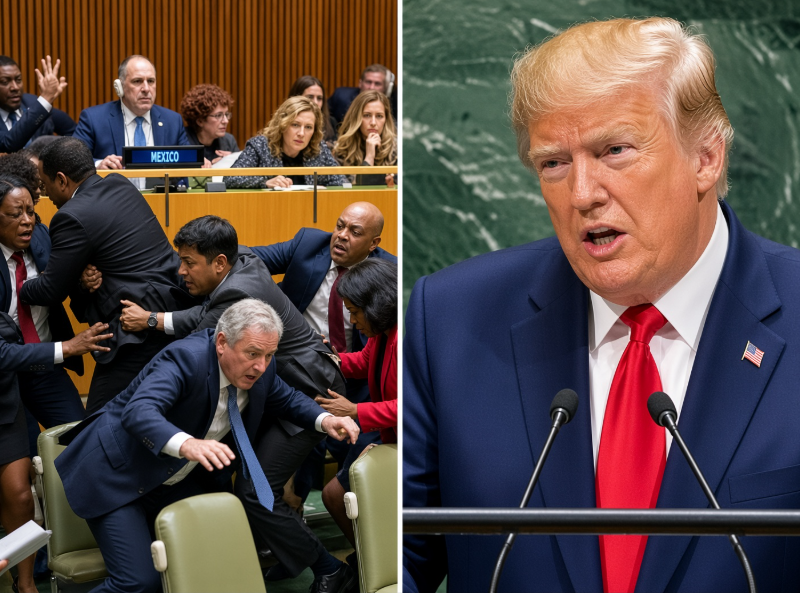
At the United Nations General Assembly, Donald Trump described Cuba as a failed state destined to fall, prompting the Cuban delegation to reportedly walk out during his speech. He also accused Havana of maintaining decades-long connections with American political groups, including the Communist Party USA, Antifa, and the Democratic Socialists of America. These claims raise questions about the distinction between Cuba’s domestic challenges and allegations of foreign influence in American politics.
The dispute extends to conflicting accounts of diplomatic negotiations. Trump has claimed that Secretary of State Marco Rubio is involved in discussions with Havana, while Cuba’s foreign minister has denied that negotiations are taking place. The disagreement leaves uncertainty about whether meaningful diplomatic engagement is underway.
Economic pressure is another central issue. The administration’s approach toward Cuba includes measures targeting access to oil and other resources, raising questions about how sanctions and restrictions affect the country’s energy supply and everyday life. The account also examines a legal challenge involving tariff threats and a Supreme Court ruling that reportedly undermined the legal authority behind those measures. A sanctioned Russian tanker’s reported passage through the restrictions adds another complication to the administration’s enforcement strategy.
The analysis also examines a State Department report cited in support of claims about Cuba’s influence. According to the account, the report identifies American officials, revisits themes associated with McCarthy-era blacklists, and acknowledges that the Democratic Socialists of America are not a Cuban asset. These distinctions matter when evaluating allegations of foreign interference.
The broader debate concerns whether economic pressure is being used to weaken Cuba while its resulting hardships are presented as evidence of governmental failure. It also raises concerns about labeling Americans who oppose U.S. policy as foreign agents without sufficient evidence.
The account urges congressional oversight of any potential military action against Cuba, emphasizing that decisions about war should involve Congress. It concludes by encouraging Americans to verify their voter registration ahead of the midterm elections.