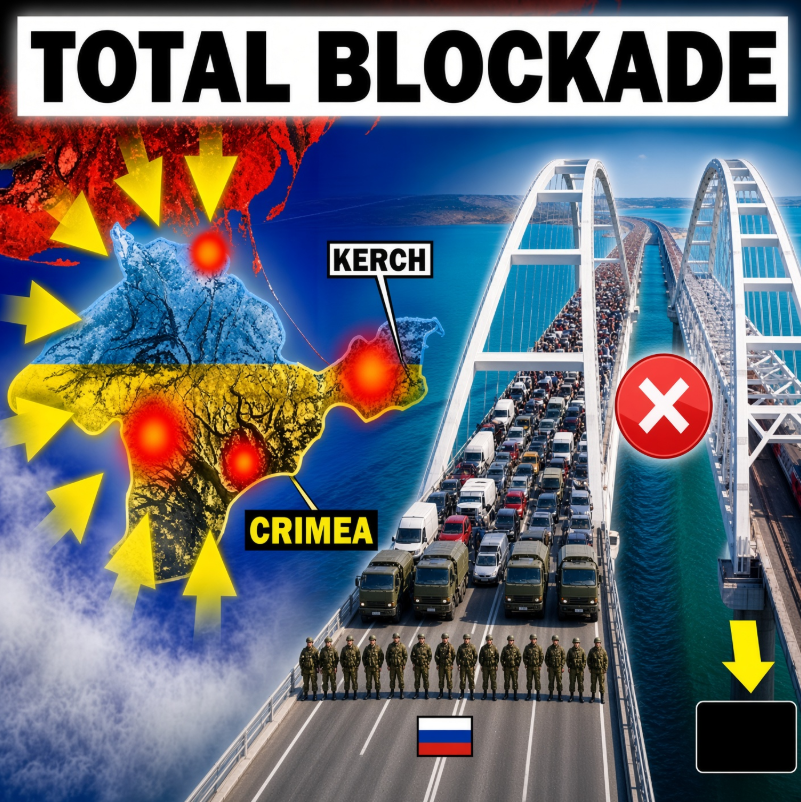
Ukraine’s reported long-range strikes on infrastructure in occupied Crimea highlight a strategy aimed at disrupting Russian military logistics, energy supplies, and transportation links. The account describes attacks reaching targets roughly 300 kilometers behind the front lines, including the Tavriiska Thermal Power Plant, gas compressor facilities, and fuel depots near Kerch. The extent of the reported damage and the claim that the strikes plunged the entire peninsula into darkness require independent confirmation.
The alleged campaign, described as a “Logistics Lockdown,” seeks to make it harder for Russia to sustain its forces on the peninsula. Electricity generation, fuel storage, port facilities, and transport routes all support military operations as well as civilian life. Disruptions to these systems could increase the burden on Russian logistics planners and force greater resources to be devoted to repairs, alternative supply routes, and infrastructure protection.
The report also claims that Ukrainian drone attacks weakened Russian S-400 and Pantsir air-defense networks and disrupted the operations of a garrison estimated at 60,000 personnel. Those specific battlefield effects have not been independently established. Damage to energy infrastructure alone would not necessarily render air-defense systems inoperable, since military units may have backup power and alternative supply arrangements.
The account further describes severe congestion near the Kerch Bridge, including a reported queue lasting nine hours and involving more than 700 vehicles. If confirmed, such delays could indicate transportation disruption, but they do not by themselves establish a mass exodus or widespread panic among Russian forces.
Overall, the reported strikes illustrate how pressure on energy facilities, fuel depots, ports, and bridges can complicate Russia’s control of Crimea. Whether this amounts to a sustained logistical crisis will depend on the verified extent of damage, repair timelines, and the availability of alternative supply routes.