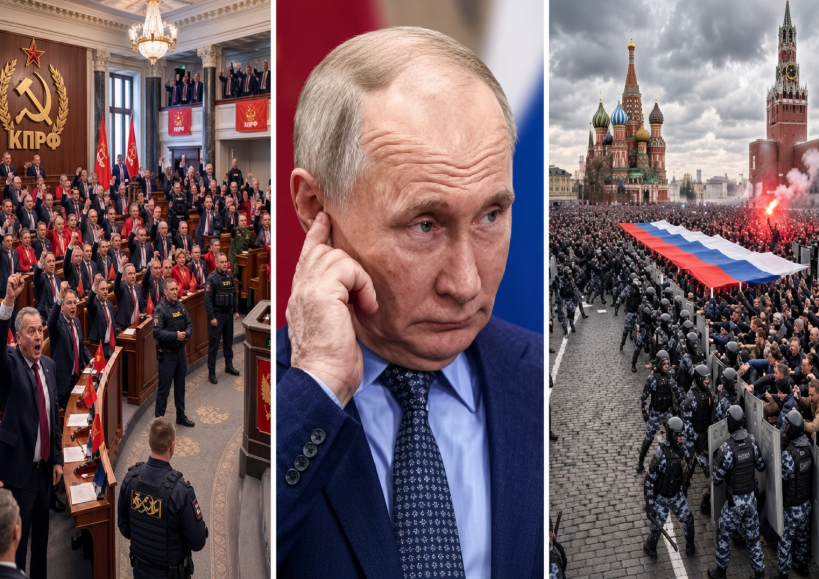
Russia is facing growing internal pressure as the prolonged war in Ukraine places increasing strain on its military, economy, political system, and elite. According to the analysis presented, divisions are becoming more visible among figures and groups that have traditionally supported the Kremlin’s war effort. Communist Party leader Gennady Zyuganov has reportedly warned about the consequences of current policies, while some prominent pro-war Z-bloggers are expressing concern over economic deterioration and the lack of a clear path to victory.
The analysis also highlights growing anxiety among Russia’s wealthy elite. Oligarchs reportedly fear potential state seizures or increased financial demands as the government searches for resources to sustain military spending and recruitment. At the same time, the claimed shortage of roughly 300,000 troops could create additional pressure on Moscow to expand recruitment or consider another mobilization.
Such a move could carry significant economic and political consequences, particularly if large numbers of working-age Russians are removed from the civilian economy. The combination of battlefield losses, recruitment difficulties, rising military costs, and elite uncertainty is presented as evidence of increasing stress within the Russian system.
The “1917 Syndrome” comparison is used to describe the possibility that prolonged war, economic hardship, and declining public trust could contribute to political instability. However, claims of an imminent internal revolt or total collapse remain analytical scenarios rather than established outcomes. The key issue is whether Russia can sustain its military campaign while managing mounting economic pressures and growing disagreements among political and social groups.