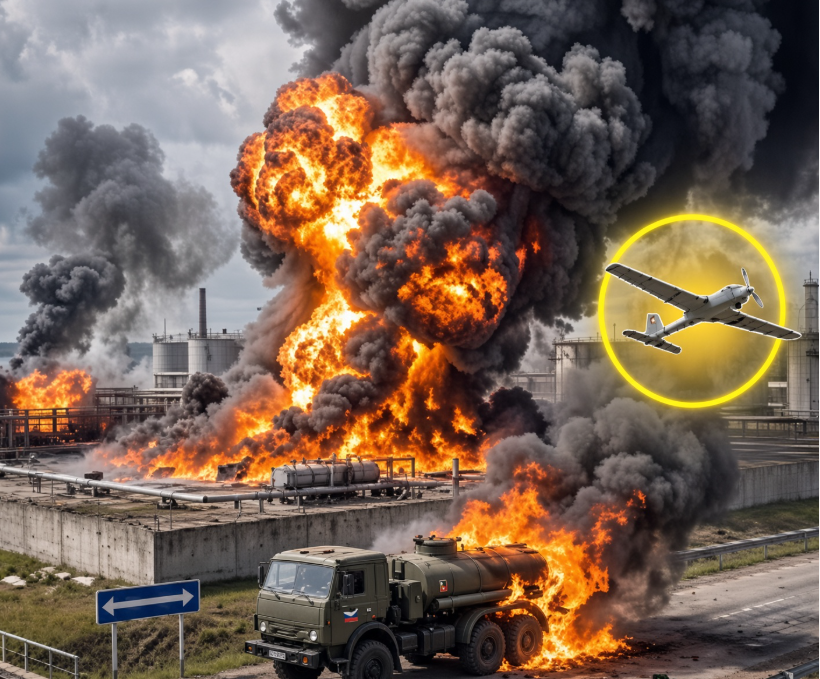
On September 1, 2026, Russian gas stations began legally selling Euro-2 gasoline, a fuel standard that had been banned in Russia since 2013, highlighting the severity of the country’s worsening fuel crisis. The move came just two days after Ukrainian drones reportedly traveled more than 900 kilometers to Kirishi and sparked a fire at one of Russia’s largest refineries.
The crisis reflects mounting pressure on Russia’s refining industry. According to the analysis, Russian refinery output fell to around 3.6 million barrels per day in July, its lowest level in more than two decades. Bloomberg reportedly counted 18 refineries targeted during the month, while Meduza identified at least 59 Russian regions facing fuel-sale restrictions by August 20. Russia has also reportedly turned to gasoline imports from India, Belarus, Kazakhstan, and Morocco.
The analysis examines why Ukrainian attacks focus on primary distillation units rather than fuel storage, how Western sanctions can make specialized refinery repairs take months, and why reduced refining capacity does not automatically translate into an equivalent loss of national fuel production. It also explores Moscow’s plans to maintain fuel supplies through lower-quality gasoline and other emergency measures.
At the same time, the economic pressure comes with a significant human cost for Ukraine. The analysis cites a Russian strike on an ammunition warehouse in Myla, Kyiv region, on August 29 that reportedly killed at least 37 people.
The report emphasizes that many battlefield and damage figures remain based on official claims without independent verification, while external indicators such as NASA FIRMS thermal anomalies provide additional evidence. The central question is how long Russia can sustain its energy system under continued attacks, sanctions, and supply disruptions.