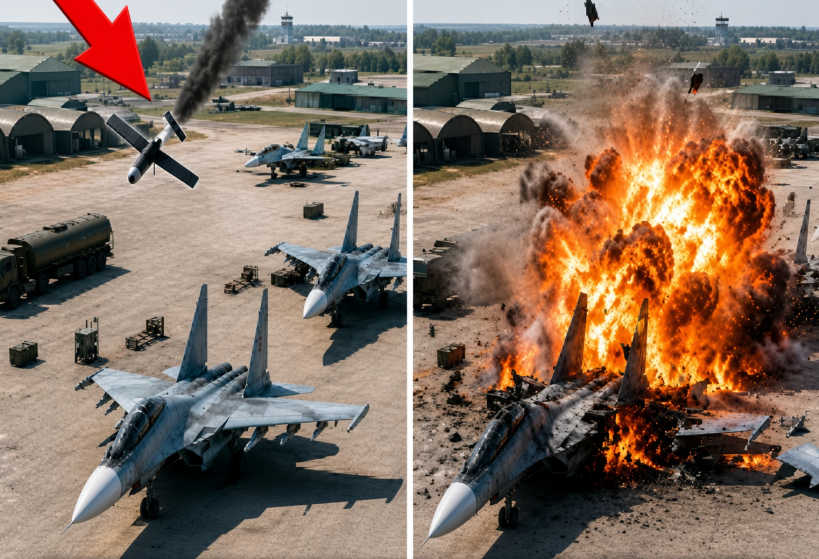
On August 23, Ukrainian forces reportedly conducted a coordinated drone operation targeting Russian military infrastructure near Vityazevo airfield, close to Anapa. Early reports identified one of the damaged aircraft as a semi-retired Su-33, but subsequent examination of available footage raised questions about that identification and suggested the target may have been a different aircraft type.
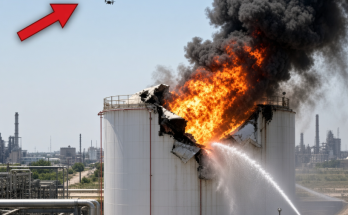
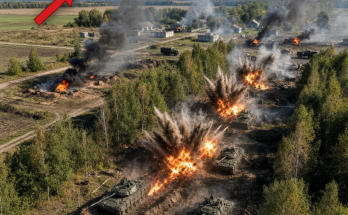
The incident was reportedly part of a much larger overnight campaign involving 14 targets across three Russian regions. Rather than representing an isolated strike, the operation demonstrated how Ukraine is increasingly using coordinated drone attacks to place simultaneous pressure on multiple military and logistical locations.
The operation also highlights the importance of rapid OSINT verification during wartime. Initial reports can spread quickly before imagery, aircraft characteristics, geolocation, and other evidence are examined in detail. In this case, closer analysis of the footage reportedly challenged the original identification of the aircraft, illustrating how open-source investigators can refine battlefield reporting after an attack.
The broader significance lies in the scale and coordination of the strikes. By distributing attacks across multiple locations, Ukrainian forces can potentially complicate Russian air-defense responses and force commanders to divide available defensive resources.
The episode demonstrates that understanding modern drone warfare requires more than counting explosions or initial claims. Reliable assessment depends on independently verifying targets, locations, damage, and timing. As drone operations become increasingly complex, rapid OSINT analysis remains an important tool for separating confirmed battlefield developments from preliminary or inaccurate reports.