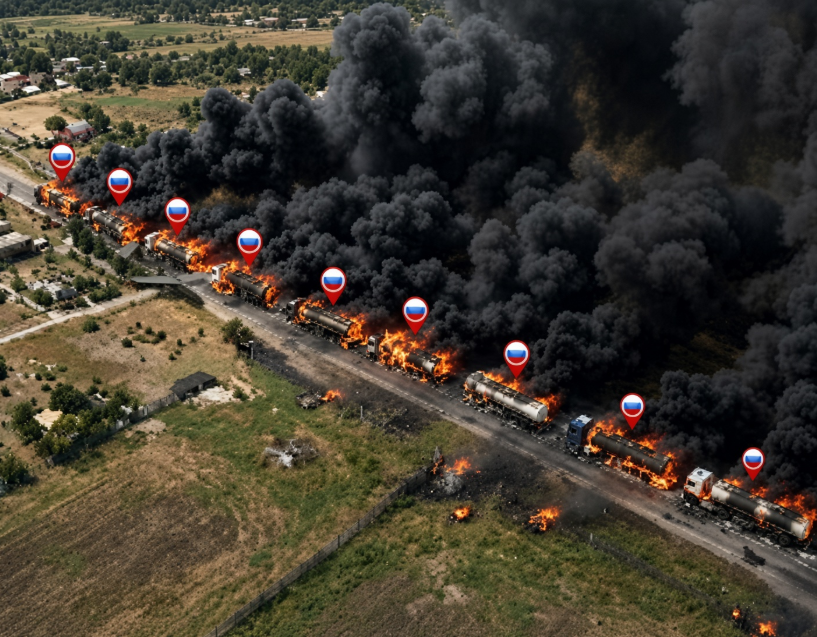
The video examines a reported Ukrainian drone strike targeting Russian fuel tankers near Prymorsk, along the Sea of Azov corridor in occupied southern Ukraine. The incident highlights the growing importance of logistics warfare, as fuel shipments are essential for sustaining Russian military operations in Crimea and along the southern front.
Prymorsk lies near transportation routes used to move fuel, military equipment, ammunition, and other supplies toward Crimea and Russian-held positions. By using drones to identify and attack fuel tankers traveling along these routes, Ukrainian forces can potentially disrupt supplies well behind the immediate battlefield. Destroying fuel vehicles can affect the movement of armored vehicles, artillery systems, transport units, and other military equipment that depend on a steady supply of fuel.
The analysis also explores why fuel tankers have increasingly become important targets for Ukrainian drone operations. Unlike attacks focused only on frontline positions, strikes against logistics vehicles can create wider pressure across the supply network. Repeated attacks may force Russian forces to change transportation routes, increase convoy protection, deploy additional air-defense measures, or spread supplies across multiple routes.
The reported strike therefore matters beyond the loss of several vehicles. Sustained pressure along the southern corridor could increase the time, resources, and security measures required to move supplies toward Crimea. However, the broader impact would depend on the frequency of such attacks, Russia’s ability to adapt its logistics network, and whether alternative routes remain available. The video assesses how this evolving drone campaign could affect Russia’s southern supply lines and the wider military logistics supporting occupied territories.