Japan’s Taiwan Security Shift: Rising Tensions with China and Russia
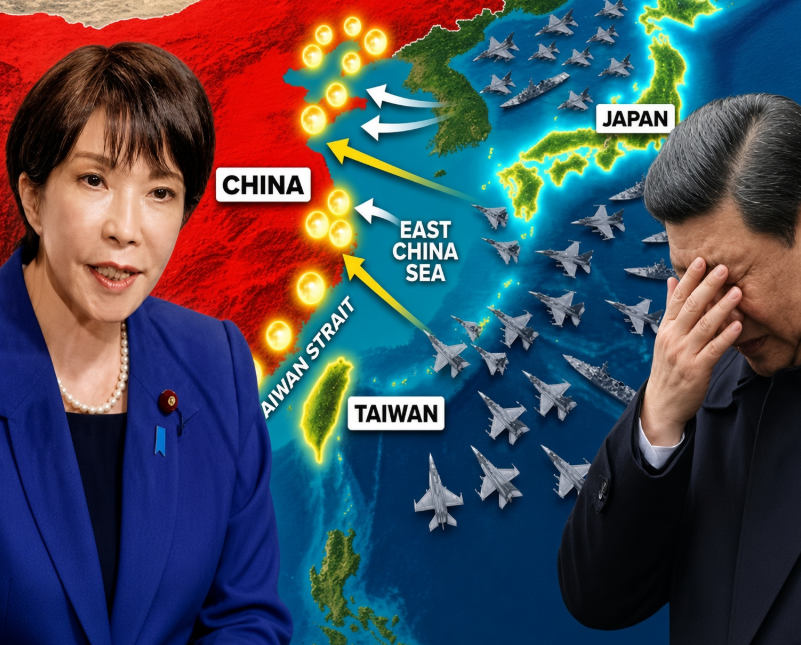
The strategic balance in East Asia is facing renewed pressure as Japan strengthens its focus on Taiwan’s security and regional deterrence. This analysis examines how a potential Chinese blockade or “quarantine” of Taiwan could affect Japan, the United States, and the wider Indo-Pacific, while highlighting the risks of confrontation among major powers.
A central theme is Japan’s changing security posture under the political doctrine associated with Sanae Takaichi. Her approach emphasizes the connection between Taiwan’s security and Japan’s national survival. Any actual military response, however, would depend on the circumstances, Japan’s legal requirements, and decisions by its government. Closer coordination with Washington could strengthen deterrence while also increasing the importance of crisis management.
The video also examines reports of senior People’s Liberation Army officers being removed or investigated amid Xi Jinping’s military restructuring. Such developments raise questions about leadership stability, operational readiness, and internal trust. Claims that Chinese strategic missiles contain water instead of fuel, however, require careful verification and should not be treated as proof that China’s military capabilities are broadly ineffective.
Taiwan’s defensive preparations, including drones and upgraded combat aircraft, form another part of the discussion. Modern radar, electronic warfare, and improved targeting systems could complicate an attacker’s plans, although their effectiveness would depend on training, deployment, logistics, and the scale of any conflict.
The analysis further considers strategic coordination involving China, Russia, and North Korea, alongside Japan’s expanding defense cooperation with the United States. Russian naval exercises near the Kuril Islands are discussed as part of the wider regional security picture, though their precise purpose should not be assumed without supporting evidence.
Ultimately, East Asia’s security environment reflects competing military preparations, political commitments, and uncertainty. Japan’s evolving posture may strengthen deterrence, but a Taiwan crisis would carry substantial economic, diplomatic, and military risks for the entire region. Claims about covert plans and specific weapons failures require independent confirmation.