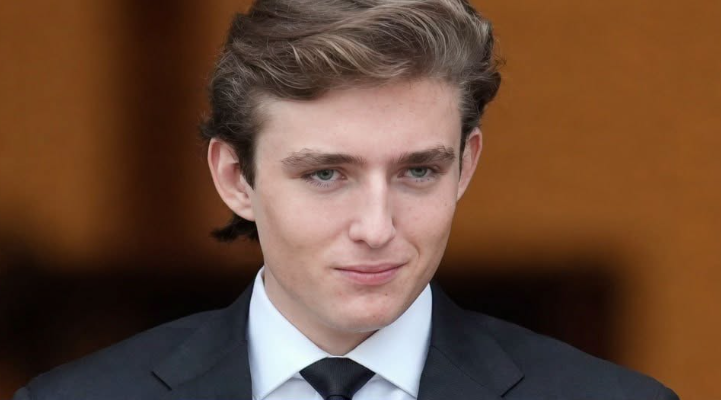
Explores a conceptual distinction between silence and stillness, arguing that silence often implies absence while stillness can reflect intentional restraint and observation. It uses this framework to interpret public perceptions of Barron Trump, suggesting that his long-standing low public profile may be better understood not as disengagement, but as deliberate attentiveness. This reinterpretation shifts the focus from what is not seen or heard to what may be consciously withheld in a highly visible political environment.
It then connects this idea to limited public remarks attributed to Donald Trump regarding his son’s interest in technology and digital systems. These remarks are used to suggest that Barron may have curiosity about how modern communication infrastructures function, including platforms, algorithms, and information flow. In this framing, influence is portrayed as increasingly rooted in digital systems rather than traditional institutions. The passage proposes that understanding these structures represents a form of influence distinct from public performance. Within this interpretation, Barron Trump is described by some observers not as simply avoiding visibility, but as potentially studying the mechanics of visibility itself. The emphasis is placed on the difference between participating in narratives and analyzing how narratives are constructed and amplified.
The passage also emphasizes the limitations of public knowledge, noting that Barron Trump has not made public statements defining his intentions or ambitions. It argues that much of the discussion surrounding him is speculative and reflects broader public curiosity rather than confirmed information. At the same time, it acknowledges that his perception in the public eye is evolving, with interpretations shifting from passivity to a more nuanced view of formative observation. Growing up under intense scrutiny is described as shaping how absence is interpreted, where restraint can carry meaning in itself. The passage concludes that whether he chooses a public or private path remains unknown, but suggests that periods of quiet may represent reflection and learning rather than disengagement, especially in a culture that often prioritizes constant visibility.
Overall, the passage suggests that contemporary public interpretation tends to assign meaning even to absence, particularly in high-profile families such as that of Barron Trump. It argues that stillness may function as a deliberate posture rather than a lack of engagement, and that such ambiguity reflects broader cultural tendencies to analyze visibility as a form of influence. Ultimately, it leaves open the question of future direction while emphasizing patience, observation, and interpretive caution overall view