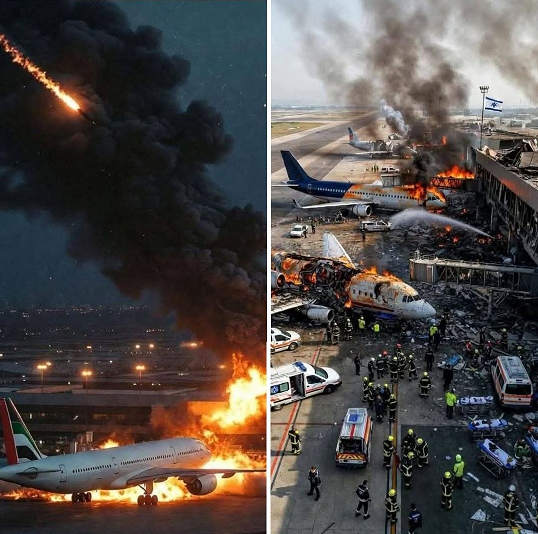
Reports of a significant operation allegedly carried out by Israel, while emphasizing that few verified details are available and that much of the situation remains uncertain. The phrase “just minutes ago” highlights both the immediacy of the event and the lack of confirmed information, as officials, analysts, and observers work to understand what occurred and why.
According to the account, early assessments suggest the operation was likely planned rather than spontaneous. Analysts note that actions of this scale generally involve extensive intelligence gathering, coordination, and strategic objectives. However, critical questions remain unanswered, including the target of the operation, its purpose, and the specific circumstances that led to its execution.
The absence of official confirmation has created an environment where speculation is spreading rapidly. Some commentators believe the operation may be connected to ongoing security concerns, while others suggest it could be a response to recent developments not yet publicly disclosed. Because Israel occupies a central position in regional geopolitics, any major military or security-related action tends to attract intense international attention and scrutiny.
The report stresses the importance of reconstructing the timeline leading up to the operation. Intelligence data, communications records, surveillance information, and witness accounts will likely play key roles in determining exactly what happened. Yet witness reports remain inconsistent, with some individuals describing unusual activity and others reporting nothing remarkable. Such contradictions are common during rapidly developing events and illustrate the difficulty of separating verified facts from assumptions.
Another major focus is the potential reaction of regional actors. Depending on the nature of the operation, neighboring countries, militant organizations, and international partners may respond in different ways. Some may interpret the action as defensive and justified, while others could view it as escalatory. These differing interpretations could influence diplomatic relations, regional security calculations, and future political developments.
The international community is portrayed as entering a period of observation and assessment. Governments, analysts, and international organizations are waiting for official statements before drawing conclusions. Historically, the first hours and days after significant developments involving Israel often shape how events unfold and how other actors respond.
The article also highlights the role of modern media and digital platforms. Social media allows information, images, videos, and claims to spread instantly across the globe, but it also increases the risk of misinformation. As a result, experts urge caution and emphasize the need for verification before accepting or sharing reports.
Beyond political and military considerations, the report notes the human impact of uncertainty. Residents in affected areas may experience anxiety, disruption, and concern about future developments. Economic consequences are also possible, particularly if geopolitical tensions influence financial markets or energy supplies.
Overall, the operation is presented as an important but still poorly understood event. While the action itself may be complete, its broader consequences remain uncertain. The true significance will depend on forthcoming evidence, official explanations, regional reactions, and the evolving geopolitical context. Until more information emerges, observers are encouraged to focus on verified facts rather than speculation.