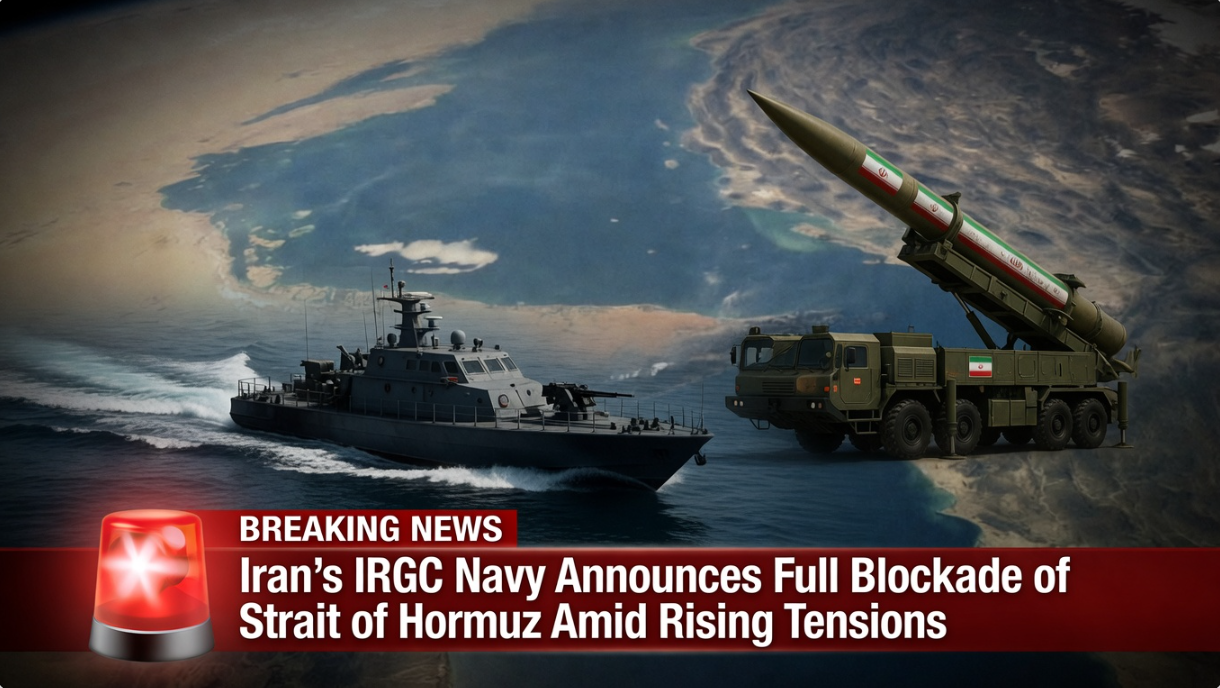
Islamic Revolutionary Guard Corps Navy (IRGC-N) announced plans to impose a complete blockade of the Strait of Hormuz beginning Saturday evening, marking a major escalation in tensions with the United States. The decision is framed by Iran as a direct response to the ongoing U.S. naval blockade targeting Iranian ports and shipping, which Tehran argues violates the terms of a fragile ceasefire agreement set to expire on April 21.
According to the IRGC-N statement, all vessels in the region—including those in the Persian Gulf and Gulf of Oman—have been instructed to remain at anchorage and avoid approaching the Strait of Hormuz. The group warned that any ships attempting to transit the waterway would be considered “hostile” and could be targeted. This directive effectively halts maritime traffic through one of the world’s most critical energy corridors, through which roughly 20% of global oil supplies typically pass.
The announcement significantly raises the risk of military confrontation at sea. Labeling commercial or foreign vessels as potential targets introduces uncertainty for international shipping companies and naval forces operating in the region. It also increases the likelihood of miscalculation or escalation, particularly given the close proximity of U.S. and allied naval assets.
Iran’s move reflects broader tensions surrounding the ceasefire, which has been strained by disputes over maritime access and enforcement measures. While the ceasefire temporarily reduced direct conflict, disagreements over blockades and shipping restrictions have continued to fuel instability. By reimposing a full blockade, Iran signals that it is willing to leverage control over the Strait of Hormuz as a strategic pressure point.
The potential economic implications are significant. Any disruption in traffic through the strait can rapidly impact global energy markets, leading to rising oil prices and increased volatility. Countries dependent on oil imports from the region may face supply concerns, while shipping and insurance costs are likely to surge.
Overall, the IRGC-N’s announcement underscores the fragile nature of the current ceasefire and highlights the Strait of Hormuz as a focal point of geopolitical tension. The situation remains highly volatile, with the risk of further escalation if diplomatic efforts fail.