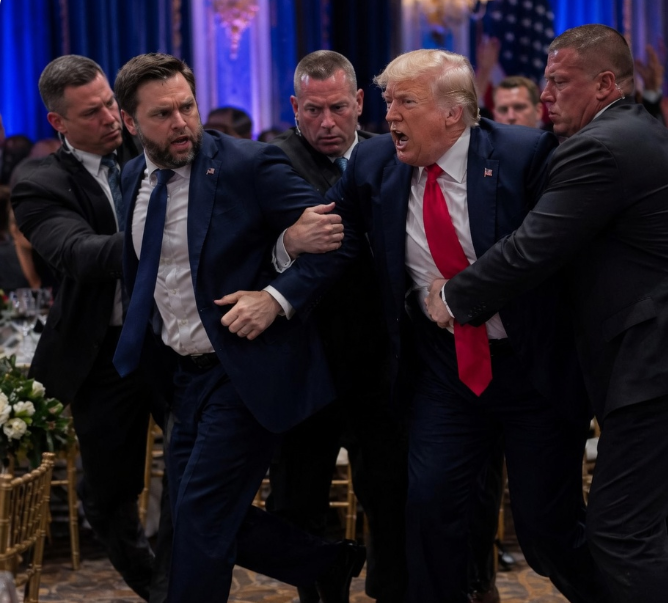
Shooting incident near the White House Correspondents’ Dinner that triggered a large-scale security response in Washington, D.C.. The event, known for bringing together journalists, government officials, celebrities, and political figures, became the focus of emergency action after gunfire reportedly broke out near a security checkpoint at the Washington Hilton Hotel, the longtime venue for the dinner.
According to the report, members of the United States Secret Service acted immediately to secure the area and protect attendees. Agents swiftly evacuated high-profile political figures, including Donald Trump and JD Vance, along with other senior officials who were present or nearby. Their rapid response highlights the high level of security normally surrounding gatherings attended by national leaders.
Authorities identified the suspect as Cole Tomas Allen. He was reportedly taken into custody after allegedly attempting to breach a secured area while armed. Law enforcement officials stated that the suspect was detained before any broader threat could unfold, though the reported gunfire and attempted intrusion created immediate concern and confusion at the scene.
Federal agencies, including the Federal Bureau of Investigation and the United States Secret Service, are said to be investigating the suspect’s motives. Investigators are also reviewing writings allegedly connected to him, which may help determine whether the act was politically motivated, ideologically driven, or linked to personal grievances. Such examinations are standard procedure in high-profile security incidents involving government officials.
The report notes that one federal agent was injured during the confrontation but survived because of protective equipment. This detail underscores the risks faced by security personnel who respond directly to armed threats in crowded public settings.
Beyond the immediate event, the incident has reignited discussion about security at major political functions in the United States. Events such as the White House Correspondents’ Dinner attract many influential figures, making them potential targets and requiring extensive planning by protective agencies. Officials are now expected to review existing protocols, perimeter defenses, screening procedures, and emergency response measures to determine whether additional safeguards are necessary for future gatherings involving senior U.S. leaders.