NATO’s eastern flank is undergoing a major military buildup, with Poland and the Baltic states expanding armored forces, border defenses, infrastructure protection, and NATO deployments amid continuing concerns over Russia and Belarus.
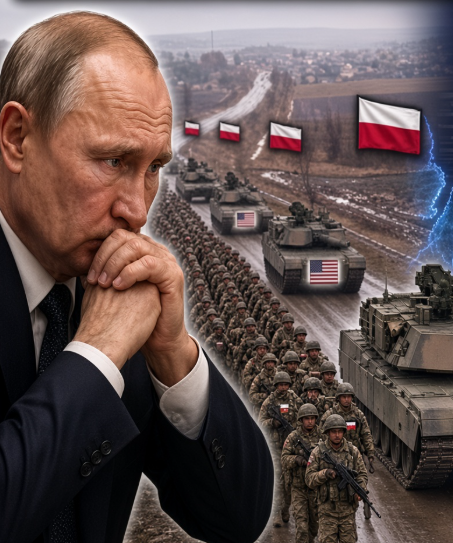
Poland has received and continues to field American M1A2 SEPv3 Abrams tanks, with the first batch delivered to the 1st Warsaw Armored Brigade in 2025. Poland is also expanding its fleet of South Korean K2 tanks, with another 180 K2s contracted for delivery between 2026 and 2030. These armored capabilities are concentrated largely in formations responsible for Poland’s eastern and northeastern defense.
The Suwałki Corridor remains a strategically important area because it connects Lithuania and the other Baltic states with the rest of NATO territory while lying between Russia’s Kaliningrad region and Belarus. Recent Lithuanian infrastructure projects in the corridor are being hardened against potential drone and sabotage threats, underscoring its importance to regional security.
Poland and the Baltic states are also developing layered defensive infrastructure, including obstacles, fortified positions, surveillance systems, and measures designed to counter drones. These defenses are intended to complicate any potential military movement across the region rather than literally create a physical blockade of Kaliningrad.
The claim that NATO has “completely cut off” Kaliningrad should therefore be treated cautiously. Kaliningrad remains Russian territory and continues to have connections through the Baltic Sea and air routes. Likewise, there is no reliable evidence that Lithuania has adopted a constitutional shift specifically to host nuclear weapons.
At the same time, U.S. forces remain involved in strengthening NATO’s eastern flank, with Lithuania announcing a new U.S. troop rotation in September 2026.
Overall, the developments point toward a more heavily fortified and permanently reinforced eastern NATO flank, centered on deterrence, rapid reinforcement, hardened infrastructure, and improved coordination among allied forces.