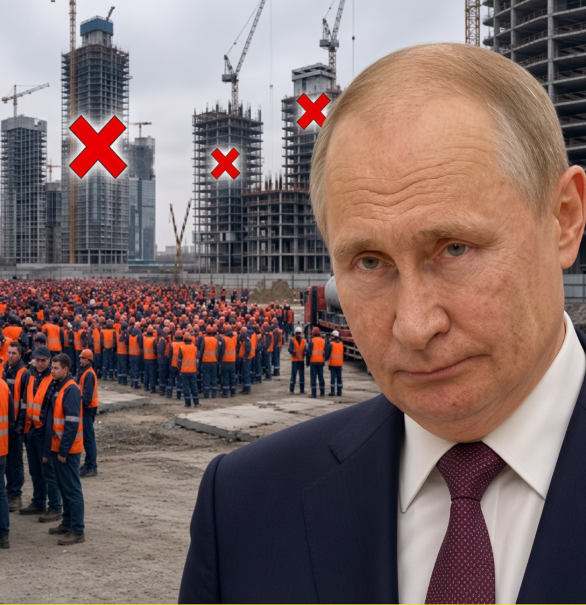
Russia’s civilian economy is facing growing pressure as labor shortages, inflation, industrial disruptions, and financial difficulties affect households and businesses across the country. Although official figures continue to show historically low unemployment, reports cited in this analysis describe significant job losses in parts of the civilian economy and increasing financial stress among workers.
The situation is particularly difficult in regions dependent on heavy industry. Coal miners in Kuzbass have reportedly faced delayed wages and financial problems, while millions of Russians working informally remain vulnerable to rising prices and limited social protections. Claims of inflation reaching around 20% would represent a major burden for households if sustained, especially as food, transportation, and fuel costs increase.
The analysis also examines disruptions affecting logistics and consumer markets. Fuel shortages and long queues have reportedly appeared in several Russian regions, while supply problems could contribute to higher prices and reduced availability of some goods.
Another major issue is the economic position of Russian war veterans. Reports of veterans struggling financially challenge the Kremlin’s promises to create a privileged “new elite” of former servicemen. The scale of these difficulties and the number of affected veterans remain subjects requiring independent verification.
The report characterizes Russia’s economic pressures as a deliberate “Starvation Draft,” arguing that authorities are intentionally using economic hardship to push unemployed or financially vulnerable citizens toward military contracts. However, evidence of a centrally coordinated policy to deliberately impoverish civilians for recruitment purposes would need to be established separately from the documented economic problems.
Overall, Russia’s wartime economy is increasingly shaped by labor shortages, inflation, regional industrial problems, and military recruitment demands, creating significant pressure on both workers and the state.